 Mountain Cur
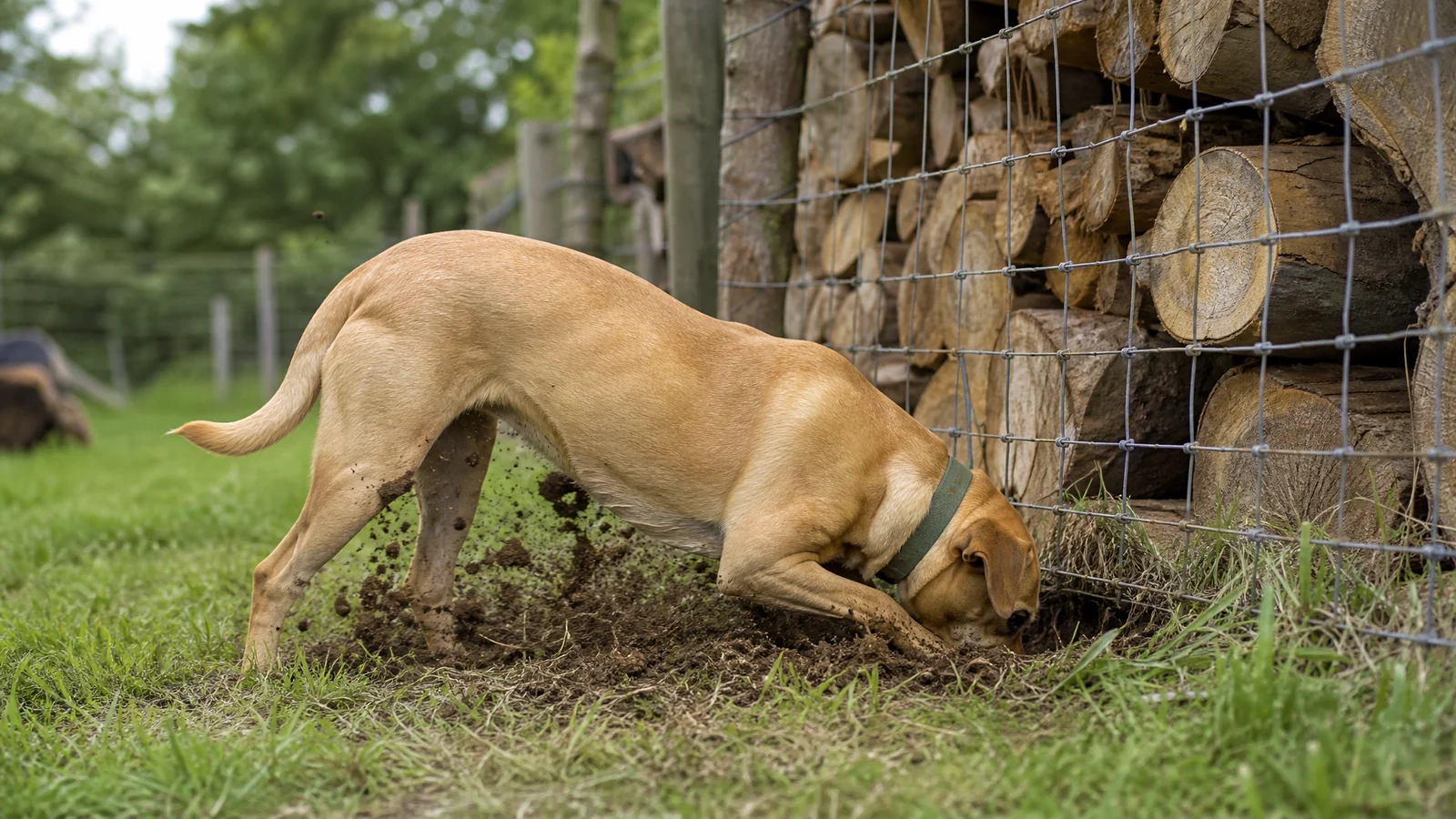
A fresh hollow at the fence is not yet a character judgment. Its location, the soil thrown behind it and what happened on the other side are evidence.
The first job is to stop access to the breach, because every successful squeeze under the boundary makes that route more valuable. This guide treats the yard as a small investigation.
We secure the weak point, inspect the full fence line, sort likely motives and build one legal place where digging pays. A weekly ledger then shows whether the behavior moved away from the boundary, which is a safer measure than expecting the instinct to disappear. The map matters as much as the number of holes.
Mountain Cur Digging Under the Fence Needs Immediate Containment
Bring the Mountain Cur indoors or use a secure leash while the breach is open. Do not leave the dog in the yard to test a temporary repair. A fast, athletic dog can enlarge a shallow gap quickly, and a nearby scent or moving animal may make the opening more compelling than usual.
Block access from the dog's side with a solid barrier that cannot fall, trap a paw or expose sharp edges. Then inspect the outside of the fence before choosing a permanent repair. The hole may emerge beside a drop, road, loose animal or other danger that changes how urgently the whole area needs reinforcement.
Supervision means staying close enough to interrupt the first paw movement and guide the dog elsewhere. Watching from a window after digging has begun is too late for that lesson. Use a leash or long line only while a person holds it, and never tether the dog unattended near a fence.
Check gates at the same time. A hole beside a gate can loosen a post, while a low gate gap may be the original invitation. If the Mountain Cur has escaped, secure the dog first and inspect for injury. Regular veterinary care also helps identify pain or skin irritation that can change outdoor behavior.
Mountain Cur Evidence at a Digging Fence Line
Walk the boundary without the dog and mark every disturbed patch, depression and soft area. Note fresh soil, worn paths, shade, drainage and what is visible beyond each point. One active corner tells a different story from shallow digging scattered around the entire yard.
| Evidence at the fence | Possible payoff | Next check |
|---|---|---|
| One hole facing a trail or animal route | Scent or movement beyond the yard | Observe at the usual active time |
| Shallow hollows in cool soil | Temperature relief or resting | Compare sun, shade and water access |
| Damage after quiet days | Unused energy or self-made work | Compare the day's activity and enrichment |
| Repeated work at a loose panel | A learned escape route | Inspect footing, posts and outside hazards |
Add timing to the map. Record when the dog entered the yard, when digging started and what had happened earlier that day. A pattern that appears after a missed walk needs a different response from one that appears when rabbits move along the same boundary each evening.
Video from a safe location can show the first event, but it should support direct supervision rather than replace it. Look for sniffing, scanning, lying down or repeated travel along one path before the paws move. Those actions help identify the payoff without provoking another escape attempt.
Keep descriptions literal. Write “sniffed the post, pawed twice and looked through the gap,” not “stubborn.” The Mountain Cur account in Showsight describes a smart, driven working dog who can get into trouble without enough direction. Specific evidence gives that drive a useful answer.
Four Motives Behind Mountain Cur Fence Digging
More than one motive can operate at the same place. A shaded corner may also carry wildlife scent, and a dog with unused energy may discover both. Start with the clearest evidence, change one part of the setup and watch what happens before adding a complicated training plan.
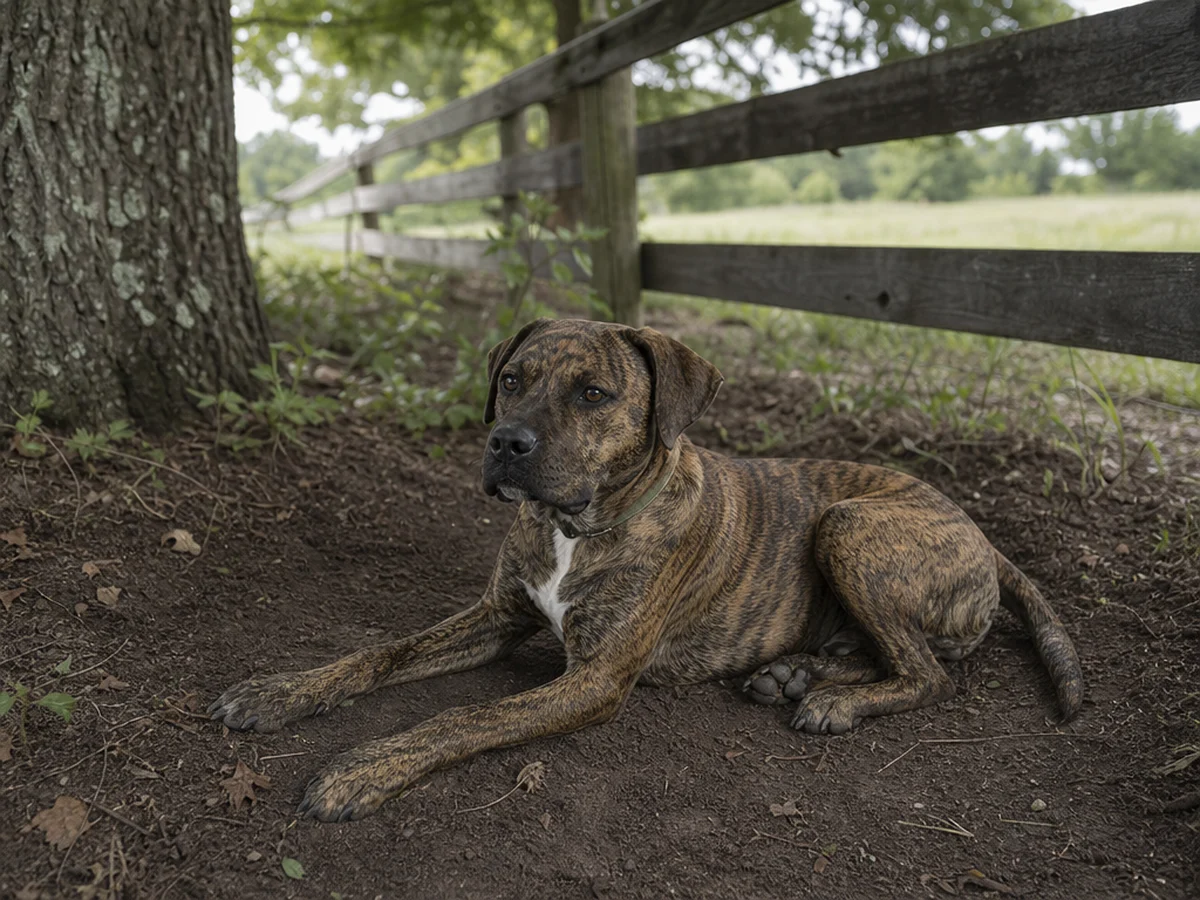
Scent Pulls the Route Outward
A nose-down approach, repeated tracking along one edge and digging aimed toward an animal path point to scent. Block the view when possible and supervise at the active time. The Mountain Cur recall guide helps build the turn away, but a fence remains essential around wildlife.
Cool Soil Offers a Resting Place
Broad, shallow hollows in hot or exposed ground may be about comfort. Provide reliable shade, fresh water and an approved resting surface before outdoor time. Bring the dog inside when weather is uncomfortable. Training cannot make a hot yard pleasant, and a cooling need should not be treated as defiance.
Unused Energy Creates a Job
Scattered excavation after low-activity days suggests the dog has invented work. Add movement, sniffing and short training before yard access. The ASPCA enrichment guide notes that using the nose can be both stimulating and calming, which makes scent work a practical part of prevention.
A Weak Point Becomes a Learned Route
A dog may return to a repaired corner because that location once produced freedom. In that case, motive and habit overlap. Reinforce a wider section, change the approach path with a safe barrier and prevent unsupervised rehearsal. The legal dig station should sit well away from this remembered route.
Repair Digging-Under-the-Fence Weak Points Safely
A permanent repair must match the fence material, soil and local rules. Secure loose posts and panels before adding ground protection. Smooth or cover every cut edge, and confirm that paws, collars and wildlife cannot become trapped. If the structure is uncertain, use a qualified fence professional.
For many yards, a buried barrier or inward ground apron can remove access to soft soil at the base. The material must be durable, securely attached and deep or wide enough for the site. Avoid exposed wire ends, unstable rocks and chemicals intended to irritate the dog.
Do not rely on punishment at the hole. The dog may connect an unpleasant event with the yard, the approaching person or being found near soil without learning where digging is allowed. Quietly block the route, guide the dog away and reinforce the approved alternative.
Vegetation can hide new damage, so trim enough to inspect the base without creating toxic plant exposure. After storms, check for washouts and shifted panels. A weekly boundary walk is useful even when the training is going well because physical security and learned behavior solve different parts of the problem.
Fence repairs do not make unsupervised outdoor time automatically safe. A Mountain Cur can investigate gates, climbable objects or a different soft edge after one route closes. Pair the structure with supervision and the broader daily plan in our Mountain Cur training guide.
Build a Legal Dig Spot Away From the Fence
Choose a location with comfortable footing, drainage and shade that is clearly separated from the boundary. A sturdy sandbox, framed soil bed or defined patch can work. Make it large enough for turning and pawing, yet simple enough to reset after each session.
Prepare the station before introducing the dog. Check the fill for sharp objects, treated material and anything unsafe to swallow. Keep the edge stable and low enough to enter easily. If the dog tends to eat soil or hidden objects, ask a veterinarian about the behavior before using buried rewards.
- Place a favorite toy partly visible in the loose surface.
- Walk the dog to the station on leash and cue a search.
- Mark and reward any sniffing or paw movement inside the border.
- Reset the item slightly deeper only after the dog succeeds.
- Finish with the dog ready for one more search, then tidy the station.
Early hides should be obvious. The lesson is that this patch pays, not that the dog must excavate wildly. The Best Friends nose-work guide starts searches with a favorite item in simple containers. The same easy-success principle suits a new dig station.
Use toys or food that will not be forgotten in the soil. Count items before and after the session, remove damaged pieces and refresh the surface. A legal digging area should be an interactive activity at first, not another place where the dog is left to invent unsafe rules.
Redirect Digging Under the Fence to the Station
Begin at enough distance from the fence that the Mountain Cur can respond. When the dog notices the old area but has not started pawing, mark the turn toward you and travel together to the station. Seed one easy find there so the alternative produces an immediate payoff.
If paws are already moving at the boundary, avoid grabbing the collar or scolding. Use the leash to create space, pause until the dog can orient and then lead toward the legal area. A dog who cannot disengage needs more distance, a blocked view or an indoor reset.
Practice when the yard is quiet before wildlife or neighborhood activity raises the difficulty. Short repetitions protect the response. Our guide to calm Mountain Cur reward training explains why an offered alternative is clearer than pressure for a dog who is already focused on the environment.
The station does not replace exercise. Mix sniff walks, reward-based training and age-appropriate activity across the week. If agility is part of the plan, the PDSA agility guide recommends discussing medical concerns with a veterinarian because the activity places demands on joints, heart and breathing.
Gradually reduce how often the station is preloaded, but continue rewarding the choice to use it. Some sessions can involve searching, while others can end with a toy game or rest. Variety keeps the location useful without turning every trip outside into a demand to dig.
Audit Digging Under the Fence for One Week
Use a short ledger for seven days, not as a promised cure window but as a comparison period. Record yard time, supervision, prior activity, the first boundary behavior, station use and any new damage. Mark repairs separately so a physical change is not mistaken for a training result.
- Did any pawing occur at the fence, and at which marked location?
- Could the dog turn away before digging began?
- Did the dog enter the legal station without being led?
- Were scent, heat, boredom or a weak route present that day?
- Did every fence and gate check remain secure?
Compare location before frequency. A dog who paws enthusiastically in the legal bed and leaves the boundary untouched has made meaningful progress even though digging continues. If damage shifts to a new fence section, improve containment and repeat the evidence review rather than simply making the original repair heavier.
Seek qualified reward-based help when escape attempts continue despite secure management, when the dog injures paws or teeth, or when intense digging appears with panic during separation. Sudden behavior change also warrants a veterinary visit. The safe outcome is not a dog who never moves soil. It is a secure boundary and a Mountain Cur who has a better place to work.
 BehaviorMountain Curs and Other Dogs
 BehaviorTeaching Mountain Curs to Stay Calm Around the Chicken Coop
 Training basicsLeash Training a Mountain Cur: Walking a Scent-Driven Dog