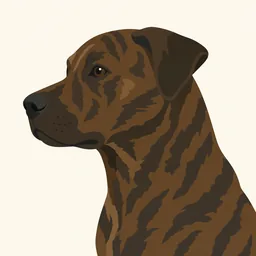
 Mountain Cur

A Mountain Cur is trained through daily relationship, short varied sessions and structure that starts early. The breed standard says they respond better to training with lots of human contact, and that one line shapes everything below. These are working treeing dogs, bred to follow a scent and stay with it, so endless drilling bores them while time spent beside you pays off.
Get this right and you live with a quick, devoted partner who gives back what you put in. Get it wrong and you share a house with a clever dog who invents their own jobs at the front door, on the couch cushions and along the fence line.
We have organized what follows by what you see and hear, from the dash through the gate and the deaf-nose walk to the barking, the grabbing and the chewed furniture, and it closes with a two-week plan you can start tomorrow.
Why a Mountain Cur Trains Through Contact
Start with what the breed was built to do. The standard describes a fast, hard hunter that runs the track with their head in the air, and when no hot track is available they circle and drift on a cold one until they find a hot one. Today these dogs are used on squirrel, raccoon and all types of big game. That is a dog with a long history of making decisions at a distance, with the nose doing most of the thinking.
The same standard calls them intelligent with a strong desire to please, which is why they are easily discouraged from tracking unwanted game. Breed fanciers put it plainly: this is a breed that works with their people and does best when a solid bond is formed. So the bond is not a nice extra. It is what makes your voice worth hearing when the outdoors is full of competing news, and you build it with shared time rather than repetition.
Set your expectations honestly, though. Trainability is rated at the top of the scale, yet the same profile admits that some may be difficult to train while others are more agreeable, and strong-willed sits among the temperament words. In the 57 Mountain Cur owners' first-hand accounts we reviewed, that split shows up in owners' accounts: a very smart dog and a hardheaded one, often described in the same breath.
In practice, you teach with what your dog actually wants. Owners report that praise, a calm voice and an offered alternative to the unwanted behavior work well, and that a timid dog may need nothing more than a look or a soft word. Some owners say harshness costs a trust that does not come back, and the science agrees that only reward-based methods should be used for all dog training, including problem behavior.
One piece of common advice deserves pushback. People say a smart, strong-willed dog needs rigorous drilling until the answers are automatic. With this breed, a dog who feels close to you and gets paid for checking in is likely to do better than one who has merely been drilled, so spend your first effort on the relationship.
Training a Mountain Cur Past Door Dashing
Door dashing looks like rudeness, but it is mostly drive meeting an open space. A dog rated at the top of the scale for energy and bred to cover ground sees an open door as an invitation, and nothing in their life has yet taught them that waiting pays better. Add a breed that is watchful at home and reserved with strangers, and a knock packs a lot of excitement into one doorway.
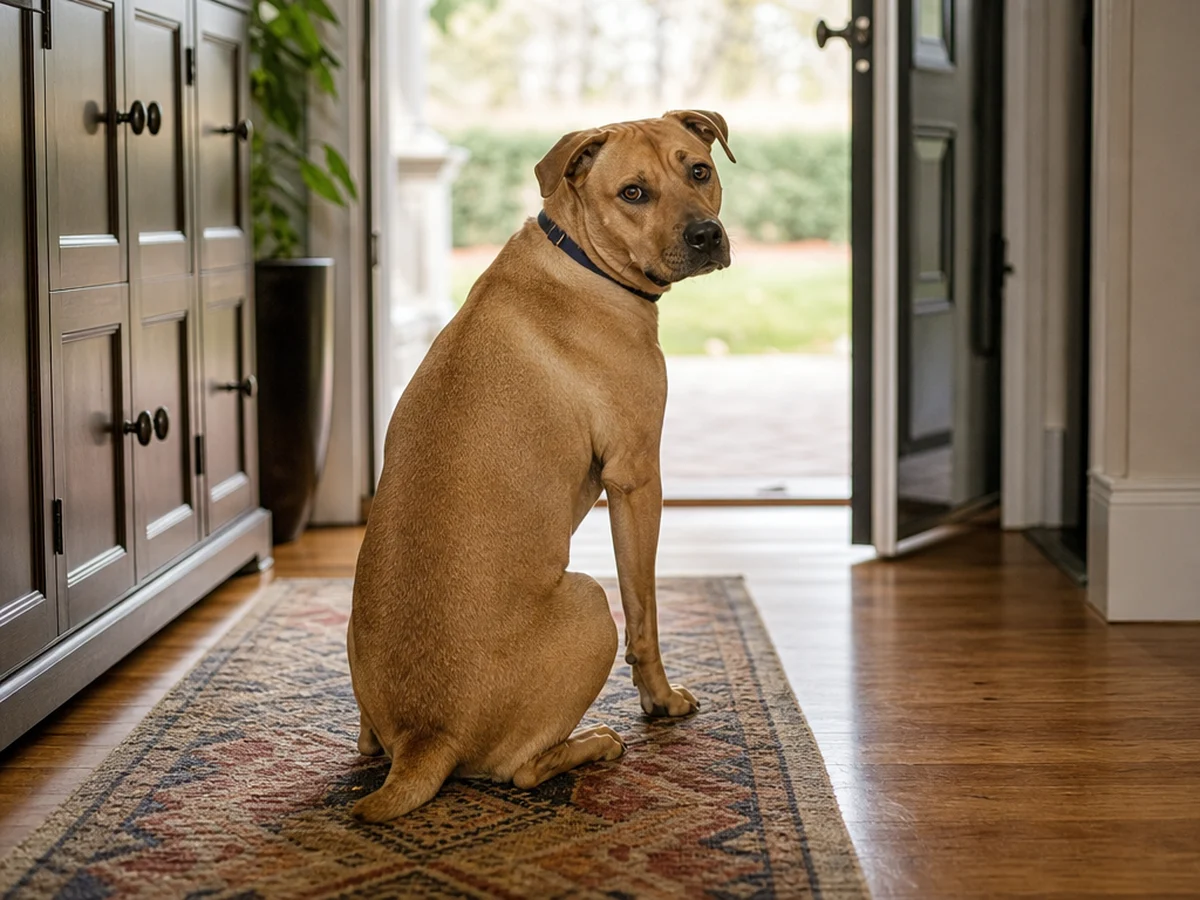
The fix is a routine so dull and so well rewarded that it becomes the default. Build it in small pieces, deliver treats at your dog's feet rather than out past the door, and keep each session short.
- Pick a waiting spot a few steps back from the door and reward your dog there for sitting or standing while you move around the door.
- Touch the handle, reward, and repeat until the handle itself becomes the cue to hold position.
- Open the door a crack. If your dog moves forward, close it calmly and reset, then reward the moment they hold still.
- Add a release word and use it every time before they cross the threshold, yard included.
- Repeat at gates with a long line attached, since a latch that clicks is just as thrilling as a door.
Visitors deserve extra planning. The goal is not a dog who loves everyone, because this breed sits at the very bottom of the scale for openness to strangers. The goal is calm and neutral, so plan arrivals as managed events with a settle spot, treats for staying on it, and supervision around anyone who doesn't live in the home.
That makes Mountain Cur socialization a bigger and longer job than it is for the average dog, since early exposure is key to a well-mannered pet and the breed is normally wary of strangers. Aim for a steady, confident dog, avoiding both fear and over-excited greetings. If children visit or live with you, teach them how to approach, because these dogs don't tolerate rude behavior such as ear pulling well.
Is Your Mountain Cur Untrained or Just Busy?
It is common to wonder this after a lovely kitchen session falls apart in the yard. Usually the dog is not defying you. Either they don't yet understand the cue in that place, or something outside is worth more than your treat, and because individual dogs differ so much, you can't assume yours will fall into line just because the ratings look high.
A simple test sorts it out. Ask for a cue they know in a quiet room, then at the doorway, then in the yard, then with something interesting nearby. If they succeed in the first and fail in the last, they are busy, so move closer to the distraction in smaller steps and raise the value of the reward. If they fail everywhere, rebuild the behavior in small pieces, rewarding each one as clicker training basics describe.
Owners also describe a dog who picks up a complex task in one or two goes, and that cuts both ways. A quick learner absorbs your sloppy timing just as fast, and repetitive practice gets old for them in a hurry. Keep sessions short and varied, change the place and the prize, and stop while there is still enthusiasm left.
Some owners mention saying the name again and again before the dog responds. Repeating teaches that the first request is optional, so say it once, wait a beat, then make the behavior easy and pay well for it. These dogs are trainable enough to become therapy dogs, so the ability is there, and if you want a trainer's help, choose one who works with rewards.
Training Recall When the Nose Takes Over
When the scent is on, a Mountain Cur can seem to have gone deaf. That is not stubbornness in the usual sense. You are asking a dog shaped to work a track to turn away from the most absorbing information in their world, and the nose usually wins that contest.
Owners name recall as the weak spot, with dogs who know every other cue but won't come, especially near small animals. Treat it as a design problem rather than a flaw of character. Build the habit on a long line or inside a secure fence, and pay your best reward the instant your dog turns from a trail toward you.
Don't promise yourself reliable off-leash behavior, because no breed source promises it for this breed. Keep the line on, keep the fence sound, and let your dog earn freedom slowly. Since the breed is described as easily trained to leave unwanted game, teach leave it and walking away from a trail with treats and play, and the instinct becomes something you can work with.
Give the nose a legal job as well. Scatter treats in the grass, hide things for your dog to find, and allow sniffing on cue during walks, so the outing is not a constant argument about scent. Cats and other small pets need extra care because these dogs may see them as prey, so keep introductions slow and rewarded for calm. Our Mountain Cur prey drive article goes through windows, fences and walks in detail.
Training a Mountain Cur Not to Grab Sleeves
Mouthy behavior in this breed is usually play with nowhere else to go. Playfulness sits at the top of the scale, and some owners describe rough, dog-style play aimed at them from the start. A dog who grabs a leash, a sleeve or an ankle is often inviting a chase game, or burning off arousal with the only handle available.
The fix is to give the mouth something legal and to make grabbing end the fun. Carry a toy on walks so your dog has something to hold instead of the leash. If teeth land on skin or fabric, stop moving, go quiet and pause the game, then restart when they are calm and reward the first bit of gentleness.
Teach a trade early, swapping an object for a treat, so your dog learns that giving things up brings something better. Breed descriptions note that these dogs protect their resources in their own territory, so the habit matters for toys, chews and food bowls alike. Keep the trades cheerful and frequent.
Owners find interactive outlets work better than toys alone, such as wrestling with the owner, agility, or a second dog to play with. Fetch splits the breed, with some dogs ball-obsessed and others uninterested, so find the game yours loves. Some owners also see excited jumping at toddlers and newborns, so keep active play outdoors, keep the house calm and supervise every interaction.
Training for Barking at Trees, Fences and Absence
This is a vocal breed, rated at the top of the scale for barking, and the voice has a history. A treeing dog announces what they have found, so a squirrel on the fence, a delivery truck or a passerby can all trigger the old job. Watchfulness at home adds to it, and so does boredom, since owners describe whining and stress yawns when exercise falls short.
Work out which kind of barking you are hearing before you try to fix it. Barking at things outside is about arousal and watching, so block the view with window film or a fence screen and reward quiet pauses. Barking when you leave is about being alone, so practice very short absences, leave something to chew and build up slowly.
To shape quiet, wait for a natural pause, say your quiet word and give a treat, then stretch the gap between barks a little at a time. You can also teach an alert-then-check-in habit, rewarding your dog for turning to you after a couple of barks. That respects the instinct while giving it an off switch. For more on noise at home, see our guide to Mountain Cur barking and whining.
Why Does Your Mountain Cur Wreck the House?
Almost always, the answer is work they didn't get. Energy and mental stimulation needs both sit at the top of the scale, and the breed is described as becoming bored and destructive without long daily walks and a real job. Breed fanciers add that they are extremely smart and will get into trouble if given the chance, especially when unsupervised.
Owners who give a figure report about one and a half to two hours of walks and play a day as the working minimum for pet homes. They tie good behavior to a tired dog: calm after the walks, no chewing in an apartment, deep sleep after agility. Where owners give an age, dogs settled somewhat after about two, though the oldest range from lazy with bursts to still full of zoomies.
Outlets matter as much as quantity. Obedience, tracking, agility and rally are all open to the breed, and Curs have been titled in many more sports. At home, try scent games, puzzle feeders and short training games that make your dog think. Some dogs who refuse a ball happily shred cardboard and junk mail, so give them a safe pile to destroy.
Management does the rest. Use a crate or pen when you can't watch, keep counters clear for determined food thieves and rotate chews. Chewing can also come from feeling ignored, so a few minutes of real attention can solve more than another toy. Keep up regular vet visits, and mention any sudden new chewing there. Our overview of Mountain Cur behavior problems helps you pick a starting point if several of these overlap.
Your First Two Weeks of Training, Day by Day
Here is a plan that puts closeness first and fits the fixes above into small daily pieces. It works for a new puppy or a rescued adult. Owners of rescued adolescents and adults most often describe a sweet, affectionate, loyal dog, even one they also call stubborn or a handful. A fearful rescue may need far longer than two weeks, sometimes years, so measure progress by trust rather than by the calendar.
On days one and two, build the relationship and nothing else. Walk together, hand-feed some meals, say your dog's name and reward every glance, and note which treats and games they like best. On days three and four, add the waiting spot at the door and start the threshold routine. On days five to seven, introduce leave it, a trade game and a few minutes of nose work, then run your first distraction test from the quiet room outward.
On days eight and nine, add a long line walk and reward every check-in, and practice a quiet visitor routine with one calm person. On days ten and eleven, work on settling on a mat and very short absences, and give your dog a proper outlet such as a sport class, a tracking game or a longer sniff walk. On days twelve and thirteen, repeat whatever went best and switch up places and rewards.
On day fourteen, teach nothing new. Take the long walk, play the game your dog loves, and notice how much more they watch you than they did two weeks ago. That is the lasting training tool for this breed: a dog who feels close to you, has real work to do and checks in because it pays will carry the rest of the training for you.
 Training basicsTraining a Sensitive Mountain Cur: Praise and a Calm Voice
 BehaviorResource Guarding and Protectiveness in Mountain Curs
 BehaviorHelping a Reserved Mountain Cur Meet Visitors at Their Own Pace