 Mountain Cur
"How much should I socialize my puppy?" Most advice says to introduce them to as many people and places as you can, as fast as you can. For a Mountain Cur, that answer falls short. The breed is normally wary of strangers, and a flood of greetings can leave a reserved puppy rattled instead of steady.
Done well, the work gives you a dog who watches a stranger, decides the visitor is nothing to worry about, and goes back to sniffing the grass. We have trained this breed for many years and specialize in their behavior, and the plan below is bigger and longer than the one for an average puppy.
Here we cover socializing a Mountain Cur puppy from start to finish: what to prepare before your puppy arrives, how to pace the first weeks, how to keep going while vaccinations are unfinished, why adolescence brings wariness, and how to tell the plan is paying off.
Socializing a Mountain Cur Before the Puppy Comes Home
Start with the target, because it shapes every other choice. The AKC rates openness to strangers at 1 of 5, the "Reserved" end of a scale that finishes at "Everyone Is My Best Friend." So the goal is a dog who notices a visitor and carries on, not one who throws a party for every guest.
A breed fancier writing in Showsight says Curs are normally wary of strangers and must be heavily socialized. Early socialization is called key to a well-mannered pet, and the breed standard disqualifies both viciousness and extreme shyness. We read that as describing the dog to aim for: steady and confident, neither fearful nor wound up.
Make the plan while the house is still quiet and you are still rested. These steps pay off most:
- Before the first visitor ever knocks, give the puppy a safe retreat: a bed or mat tucked in a quiet corner of the house, where they can go whenever they like.
- Agree on guest rules with everyone in the house: no grabbing, no looming over the puppy, and a few treats by the door to hand out for calm behavior.
- Teach the children as well as the dog. The same fancier says Curs do not tolerate rude behavior well, such as ear pulling, and that children must be taught how to interact safely.
- Plan for the puppy to live among people, since the breed standard ties good training to plenty of human contact and these dogs do best when a solid bond forms with their family.
- Book the first veterinary visit, and keep regular checkups on the calendar all through puppyhood.
Young children and other dogs both land at the "With Supervision" midpoint of that rating system, so an adult stays close during every meeting. For more on how a reserved temperament shapes everything else, see our guide to Mountain Cur temperament.
Socializing Gently During the First Weeks
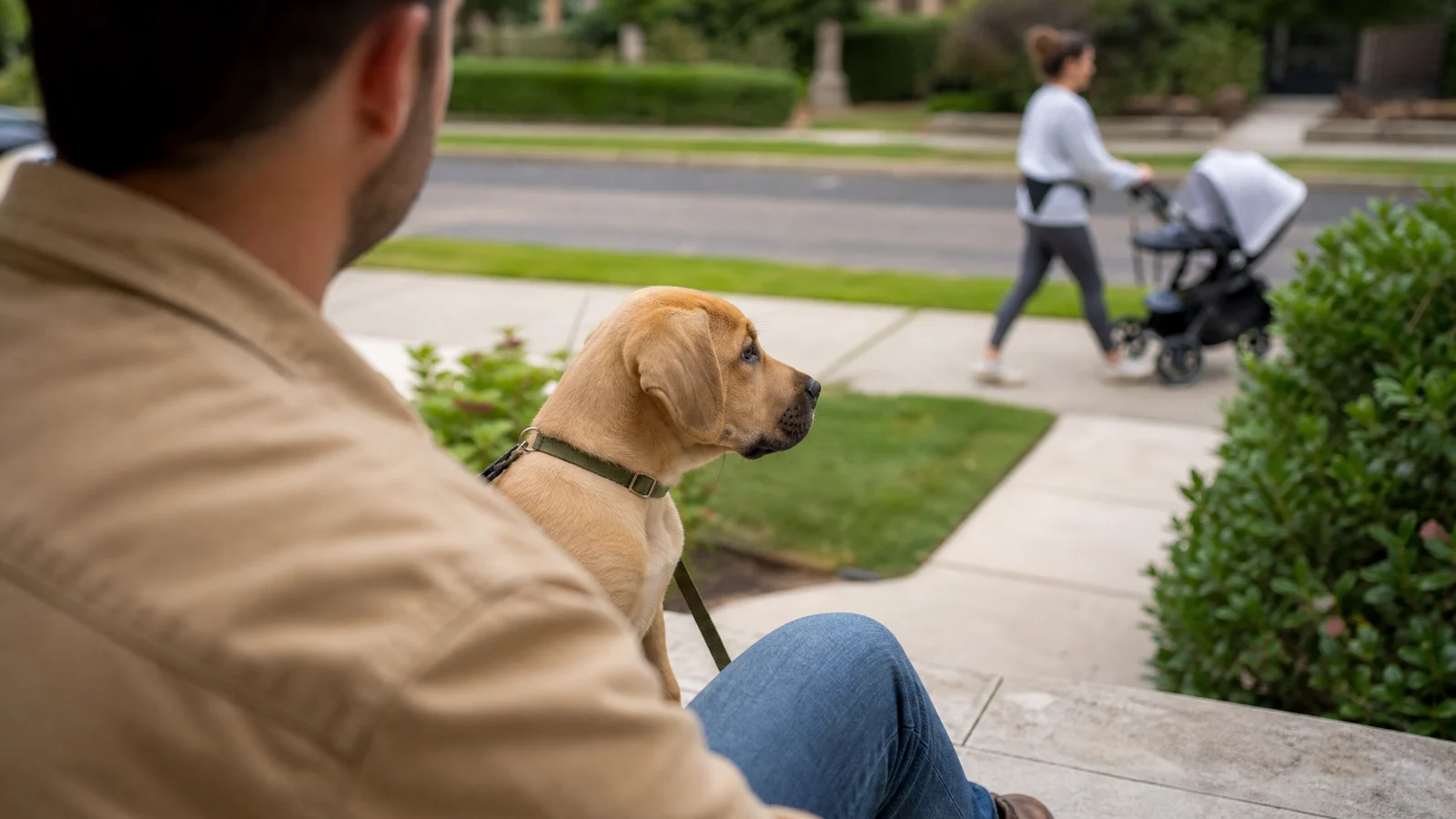
In the first days home, watching beats meeting. Sit on the porch step with treats in your pocket and let the world drift past: a neighbor with a stroller, a truck downshifting, leaves skittering over the sidewalk. Each time the puppy looks and then glances back at you, give your marker word and follow it with a treat. That small loop teaches that new things predict good things.
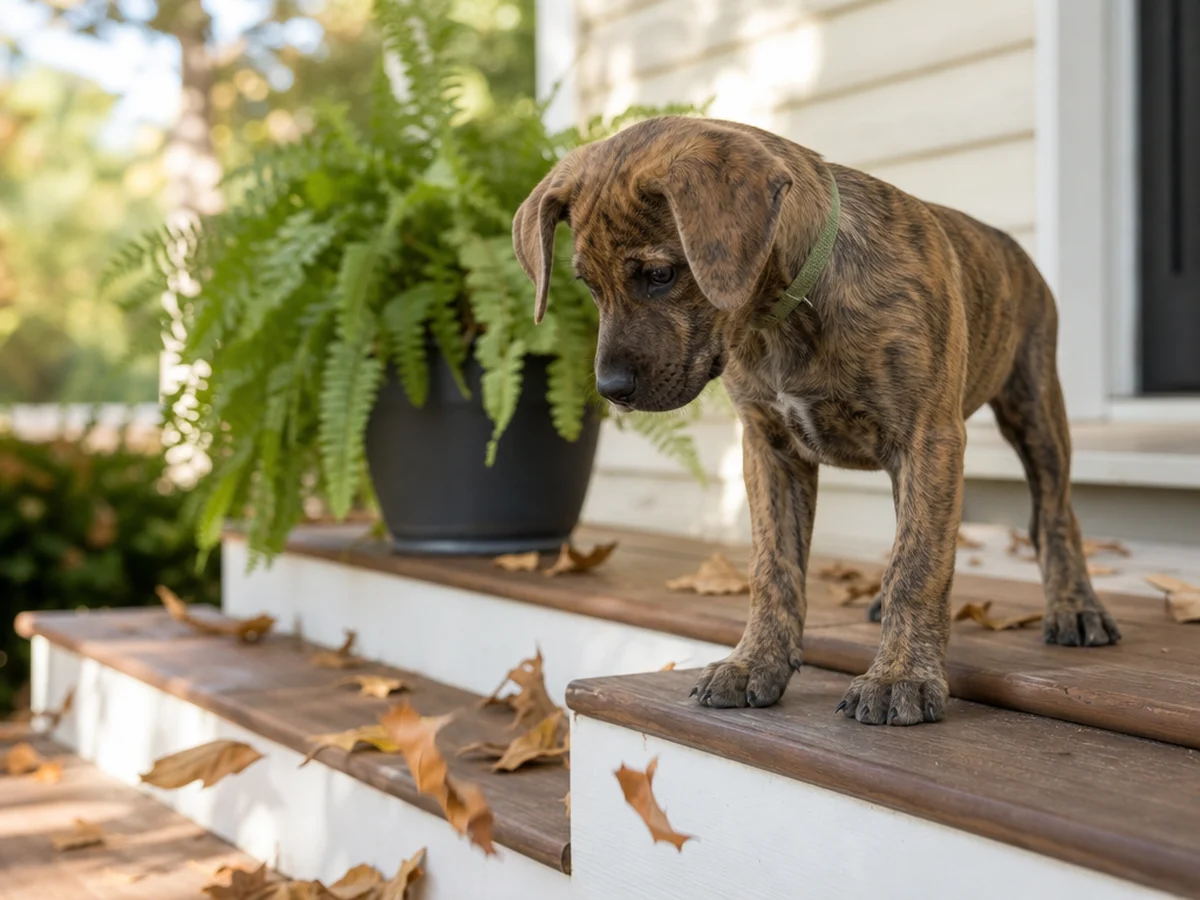
Puppies go through normal fear periods, commonly somewhere between 8 and 11 weeks, then once more starting near 6 months. A puppy who flinches at something familiar is not backsliding. Keep socializing, but at the puppy's pace.
Meeting People on the Puppy's Terms
Common advice says to pass the puppy around so everyone gets a cuddle. We would push back: for a reserved Cur, being pulled into contact teaches that strangers are something to endure. Let a friendly adult stand side-on, skip the eye contact, and wait. If the puppy wanders over to sniff, a treat from a low, flat hand is plenty. End the greeting while the puppy still looks comfortable.
Change one thing at a time, such as a deeper voice, a hat, or someone who moves slowly. Notice which kind of person makes your puppy tense and add that person last.
Sounds, Surfaces and Handling
Fold sound into mealtimes. Let ordinary household clatter play at a low level while the puppy eats, and raise it only after the puppy shrugs it off. Add gravel, cool tile, a wobbly board and a crunchy pile of leaves, with a treat on each. Touch paws, ears and tail briefly and reward, because some owners report a lasting dislike of the vet, the car and nail trims, strong enough to shape care routines.
Sounds deserve extra care. Owners of adult Curs describe strong fear of thunder, storms and odd noises such as snap fireworks or a gurgling drain. Some of those dogs were rescues with unknown pasts, so no one can name a cause. What you can do is make sound predictable and pleasant early.
Owners also say thundershirts and calming collars were not enough on their own. What helped was a blanket during storms, more exercise, and a hiding place the dog may use only while storms are actually rumbling.
Can Socialization Wait Until the Shots Are Done?
It should not wait, and the reason is the clock. Puppies are most receptive to learning about the world roughly between 3 and 14 weeks old, and that stretch overlaps the vaccination series. Keeping a puppy indoors for all of it would waste the period when learning comes easiest.
What changes is where and how. Carry the puppy to a quiet spot and sit on a blanket to watch traffic, joggers and strollers from a distance. Invite healthy, vaccinated adults you know into your home, one at a time, and let the puppy meet them with a treat on offer. Sit in a parked car with the door open and let the puppy take in the smells.
Keep the puppy off ground that many unfamiliar dogs have used, such as dog parks, pet store floors and public lawns, until your veterinarian gives the all clear. Handling, household sounds and calm visitors can all start today. Your puppy loses nothing by being carried.
This is general information, not medical advice. Ask your veterinarian when your puppy's vaccinations make outings and dog meetings safe.
Socialization Through the Adolescent First Year
From about three months on, the job shifts from first impressions to widening the circle. Veterinary behavior guidance says to keep socializing past the first three months, and for a Mountain Cur, continuing is not optional. Each new person, dog and place follows the same script: distance first, treats from you, and the puppy decides.
Widening the Circle of People
Add variety slowly: a neighbor in a rain jacket, a delivery driver, a visitor who walks with a cane. Keep every meeting short and end on a good note, even if that means leaving early.
Plan each visit to your home as a managed event. The fancier advises supervising Curs with anyone who does not live in the home, and these dogs can be very protective of their pack and home. Send the puppy to the settle spot before guests step in, hand them a few treats, and reward calm. Our article on protectiveness in Mountain Curs covers what to do if that side grows strong.
Dogs, Children and Small Pets
Choose dog friends with care. Pick calm, friendly adults you know well and start with parallel walks at a comfortable gap. The fancier notes that Curs handle pushy or overly friendly dogs poorly, so skip crowded dog parks and any dog who barrels up to say hello. A good play partner respects the puppy's pause.
Small pets need their own steps. Curs may see small pets such as cats as prey, so keep introductions managed, with a barrier and rewards, and never assume the pair will be fully safe unattended.
Busy Places and Outings
Busy places come last. Sit on a bench near a store entrance with a pocketful of treats and let the carts, voices and engine rumble roll by. A good long walk first helps, since Curs are high-energy working dogs bred for stamina, and a pleasantly tired puppy learns more calmly.
Why Does a Mountain Cur Turn Wary at Adolescence?
A puppy who greeted visitors happily may start barking at them months later, or startle at things that never bothered them. That is the second fear period arriving from about 6 months, and in a breed that is reserved with strangers to begin with, expect it to show. Keep socializing, but slow down and drop back to easier distances.
Read the quiet signals before the loud ones:
- Turning the head or body away, or tucking in behind your legs.
- Lip licking, yawning, a lowered body or a tucked tail.
- Freezing, trembling, or turning down a treat the puppy normally loves.
- A stiff, fixed stare at a person or dog, sometimes with barking.
- Hauling toward the exit or trying to bolt.
When you see them, widen the gap, pause the session, and let the puppy decompress somewhere quiet. Come back later with an easier version of the same exercise. Forcing the meeting teaches the wrong lesson, and retreating from every outing does too. Shrink the step instead of skipping it, and keep your voice calm and your praise generous, as in our guide to training a sensitive Mountain Cur.
If your Cur came from a shelter, expect gaps. Owners often know little of a rescue's past, and the shelter's description does not always match the dog at home, with a dog billed as quiet and lower energy proving otherwise and an age off by years. Our guide to the first weeks with a rescue covers that start.
Owners of rescues who arrived fearful describe hiding and shivering, and say the dogs settled through love, consistency, encouragement and time. For the most fearful, that meant years, not weeks. Owners of rescued adolescents and adults most often describe a sweet, affectionate, loyal dog, even one who is also stubborn. A puppy with lasting fear deserves a conversation with your veterinarian too.
Keeping Socialization Going for the Adult Mountain Cur
By adulthood the work is upkeep, and it should fit your week. Plan a couple of outings with fresh smells and sights, a bench-and-treats session now and then, and a small set of trusted visitors the dog knows well. Curs are friendly with the people they know, so a steady circle of familiar faces suits them better than a revolving door of new ones.
Keep your expectations realistic. A Mountain Cur may stay reserved with strangers, and some owners describe adults who are wary of change and new things. That is why novelty belongs in the plan for good: a new route, a new floor, a rearranged room, each paired with food. Keep vet handling pleasant too, with short happy visits where nothing happens.
Thunder fear can linger even after careful work, so treat storms as a management job and use the comforts that have helped many dogs, such as a blanket or a hiding place allowed only while it is actively thundering. These dogs love having a job, which is why they excel in dog sports. A sniff walk or a settle practiced at a quiet patio gives them one, and it keeps them practicing calm around the world.
Signs Socialization Is Working and When to Call a Professional
Everything above leads to one idea. A Mountain Cur is reserved by nature, so the aim is a calm, neutral dog who tolerates strangers and recovers fast, not one who loves everyone. Progress looks like quiet. These are the signs it is working:
- After a startle, such as a dropped pan or a passing truck, the dog recovers within moments and goes back to sniffing or playing.
- New objects, surfaces and sounds draw curiosity instead of backing away.
- Treats are accepted in unfamiliar places.
- The dog settles on the mat when visitors arrive, watching without worrying.
- A stranger can stand nearby while the dog ignores them or sniffs politely, then moves on, with a loose body and soft eyes.
Ask a reward-based trainer or a veterinary behaviorist for help if you see fear that persists and does not ease with space and time, long periods of hiding, refusing food in new places, escalating barking or lunging at people or dogs, or snapping and biting.
A minority of owners report a hard start, including aggression toward one family member or rough, dog-style play aimed at people. The sooner help arrives, the easier the fix tends to be. The fancier also advises working with a professional trainer for this breed, and we agree.
Measure your Mountain Cur by steadiness, not by how many people they love. Patient, rewarded, small steps, repeated over the years, raise a dog who is calm and confident wherever life takes them.
 Training basicsMountain Cur Temperament: What It Means for Training
 Training basicsHow to Train a Mountain Cur: The Complete Guide
 Training basicsTraining a Sensitive Mountain Cur: Praise and a Calm Voice