 Mountain Cur
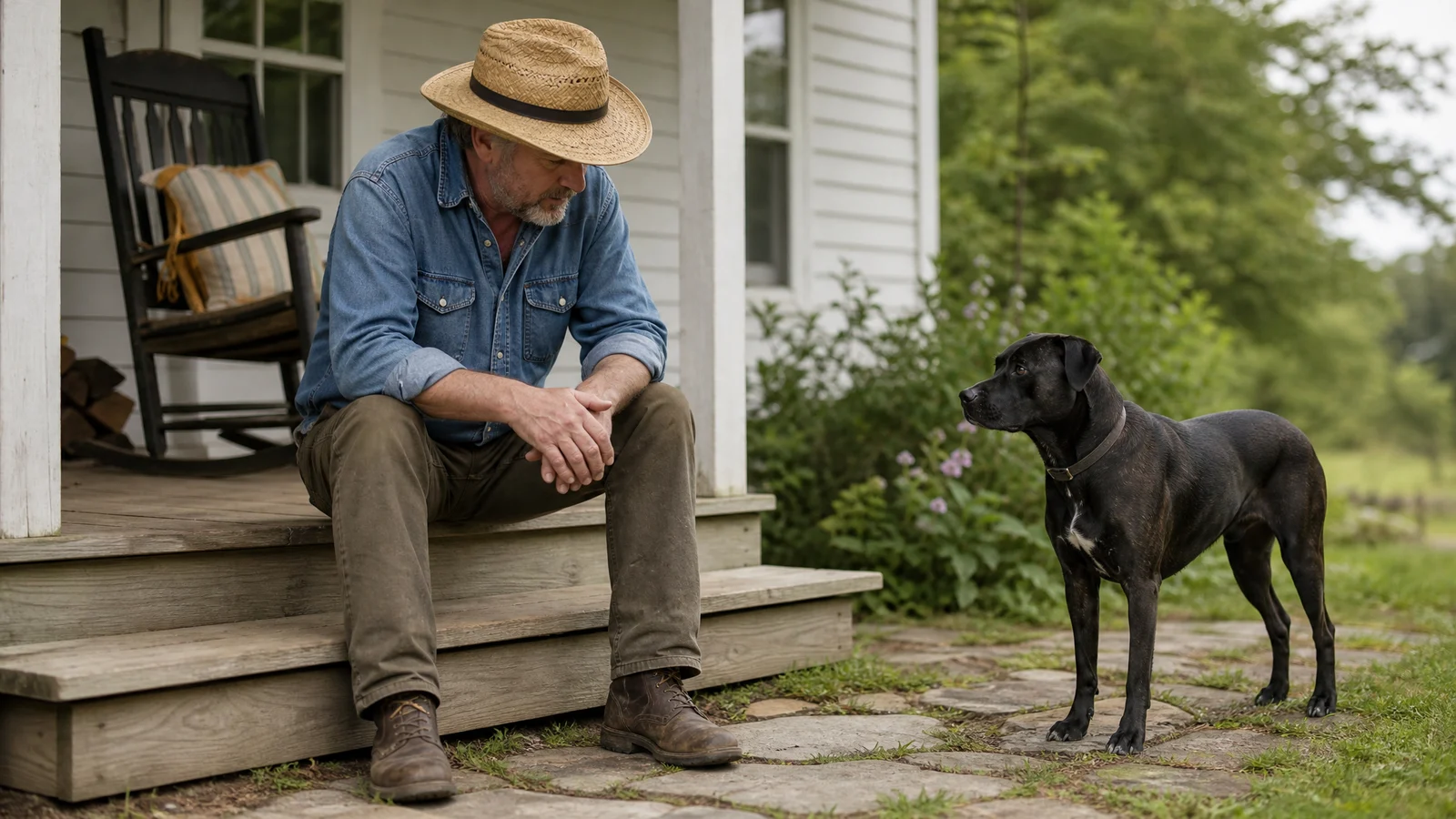
A visitor can spend an entire evening in the same room as a Mountain Cur without touching the dog, and the meeting can still be a success. The dog may watch from a bed, sniff after the person sits and then choose distance again. Calm coexistence is a more useful first goal than instant friendliness.
This guide turns the room into a consent map with a retreat zone, an observation zone and an optional approach zone. The guest receives a simple role, while the dog's body language decides whether the map opens or closes. The same rule works for people met on walks: notice, choose distance and leave without being required to greet.
Reserved With New People Is Not Failure
The Mountain Cur fancier account in Showsight describes the breed as normally wary of strangers and emphasizes thoughtful socialization. Reserve can look like watching from a distance, declining touch or taking time to approach. None of those choices needs to be treated as disobedience.
Measure the meeting by steadiness. A dog who can observe, take food, sniff the room and leave the interaction is functioning around the visitor. A dog who accepts petting while frozen, leaning away or watching every movement is not offering the same evidence of comfort.
The goal is not to make every stranger important. It is to help the Mountain Cur remain safe and able to make ordinary choices while a new person is present. The site's broader Mountain Cur temperament guide explains how watchfulness, family loyalty and reserve fit together.
We also separate curiosity from consent. A dog may move closer to collect scent, inspect a bag or follow food without wanting hands to reach in. Pausing after the approach lets the dog decide whether to remain, return or leave, which gives a clearer answer than assuming proximity invites contact.
A Visitor Map for Reserved Mountain Curs
Choose the dog's locations before anyone knocks. Keep the route between them open and out of the entry path. A gate, leash or closed door can manage movement, but the dog also needs a real place to settle where the guest will not follow.
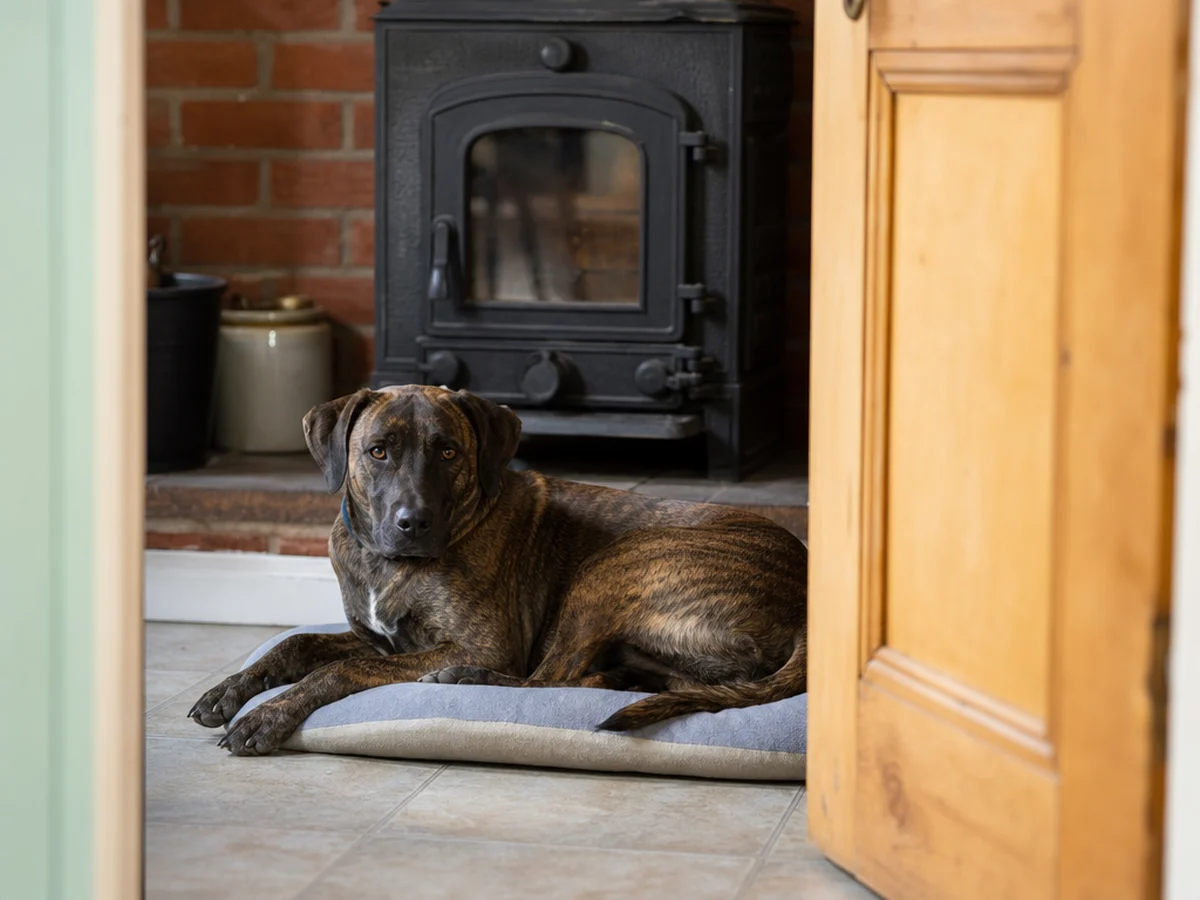
Prepare the map before the day of a visit. Walk the dog between retreat and observation when the room is quiet, reward rest in both places and check that furniture does not create a narrow passage. Familiar routes make it easier to move without directing the dog through the visitor's space.
Retreat Zone for a Mountain Cur Reserved With New People
This is the no-contact space: a separate room, open crate, bed behind a gate or quiet end of the room. Food and water can be available there, but the visitor never approaches, calls or reaches into it. Leaving for this zone ends the social request.
Observation Zone for a Mountain Cur Reserved With New People
Place this area far enough from the entry that the dog can watch without blocking the doorway. A mat beside the household, with an easy route back to retreat, often works. Reward ordinary actions there, such as looking away, sniffing the floor or resting a hip.
Approach Zone for a Mountain Cur Reserved With New People
The approach zone is near a seated visitor but not between the person and an exit. The dog may enter, sniff and leave. The guest remains neutral until the dog repeatedly returns with a loose body, and even then contact is optional rather than the price of coming closer.
The UKC Mountain Cur standard notes that the breed responds better to training with abundant human contact. Use that relationship as the dog's anchor. A familiar person can move calmly between zones and reward choices without passing the dog from hand to hand.
A Mountain Cur Reserved With New People Needs a Briefing
Send the instructions before the visitor arrives, when nobody is trying to remember them over barking or movement at the door. The visitor's task is to become predictable, not to win the dog over. A person who can ignore the dog kindly is often more helpful than one offering constant treats and attention.
- Enter without looking directly at, calling or reaching toward the dog.
- Sit sideways and keep hands close to the body while the dog observes.
- Allow every approach and retreat without following or coaxing.
- Toss food to the side only when the household says the dog is comfortable.
- Leave the retreat zone completely alone throughout the visit.
Reward-based training still includes clear structure. The AVSAB humane training statement explains that dogs benefit from routine and guidelines taught without fear, intimidation or pain. Here, the boundary is simple: the guest stays out of the dog's zones unless the dog crosses into shared space by choice.
Practice the arrival without a greeting. Bring the dog to the observation zone before the door opens, let the visitor enter and sit, then reward the dog for returning attention to the household. A familiar helper can repeat the sequence until an arrival becomes a predictable room change instead of an immediate social test.
Plan for the visitor to move again. Standing, carrying a coat or walking toward the restroom can be harder than sitting quietly, so announce the movement and return the dog to observation first. The guest can stand only after the route is clear, then sit again before the dog is invited to make another choice.
Departures deserve the same preparation. Put the dog in the observation or retreat zone before the guest gathers belongings and moves through the entry. Reward calm attention to the household while the door closes, rather than turning the most active part of the visit into a final greeting.
Body Language Guides Reserved New-People Meetings
Distance changes according to the whole body, not the presence of a wag or the fact that the dog accepted food. Look at movement, mouth, eyes, ears and recovery together. The dog should be able to turn, leave and resume ordinary behavior before the meeting becomes harder.
Comfort Opens the Map
A loose body, curved approach, relaxed mouth, easy sniffing and repeated choice to return support another small step. Keep the visitor seated and let the dog decide whether to investigate again. If touch is offered, use a brief contact at the shoulder or chest and pause to see whether the dog returns.
Uncertainty Holds the Distance
Lip licking, repeated looking away, a lowered body, ears held back or a slow approach followed by a quick retreat mean the current distance may be enough. Battersea's body-language guidance notes that subtle fear signals can appear before barking or snapping. Stop advancing and let the dog return to observation or retreat.
A Hard Body Closes the Meeting
Stiffness, a fixed stare, forward weight, barking that does not ease or an inability to turn away closes the approach zone. Move the visitor and dog apart with barriers and calm household movement. The dog can spend the rest of the visit in the retreat zone without another attempt.
Do not wait for a growl before making space. Earlier signals are the dog's least expensive way to communicate discomfort. Responding to them teaches that leaving works, which can reduce the need for louder behavior in future visits.
Recheck the body whenever the person changes position, speaks more loudly or introduces an object. Comfort is specific to the current picture and can change within a visit. Return to the last easy zone instead of treating an earlier approach as permission for everything that follows.
Reserved With New People Away From Home
A sidewalk has no bedroom retreat, so create zones with route choice. Cross the street, step into a driveway with permission or turn onto a quieter path before the person is close. A loose leash should preserve the option to move away rather than hold the dog beside someone.
The reserved Mountain Cur does not need to meet every person who asks. Choose among three useful outcomes based on the dog's behavior:
- Pass at a comfortable distance while rewarding attention back to you.
- Pause and let the dog observe while the person continues without contact.
- Allow a brief approach only when the dog moves forward loosely and can leave.
Tell the person what will happen in plain language. A short statement such as they are training and will not greet protects the dog from surprise. If the dog chooses to sniff, ask the person to remain still rather than reaching overhead.
Narrow sidewalks and building entrances reduce choice. Pause before entering, scan for people and wait where the dog has room to turn. If someone appears inside a tight space, step away and let them pass rather than asking the Mountain Cur to squeeze through a greeting.
Keep outdoor practice separate from exercise goals. A short observation near a quiet path can end after one comfortable pass, then the dog can take a decompression route without more social decisions. Ending early protects the quality of the response and prevents a successful meeting from becoming a crowded sequence.
The site's Mountain Cur training guide explains how relationship and short practice support these choices. For a current visitor plan, quality matters more than collecting greetings. Repeated observations that end comfortably can build steadiness without changing a naturally reserved dog into a social butterfly.
When a Reserved Mountain Cur Should Not Greet
No greeting is the correct plan when the dog cannot eat, recover or use the observation zone, when the visitor will not follow instructions or when movement must stay unpredictable. Tradespeople, busy family gatherings and children running through the entry can all be managed with a closed room and a familiar activity instead.
Children need an especially conservative setup because quick movement and direct attention can change the meeting abruptly. Use a secure barrier and keep the child out of every dog zone. A calm observation from another room is enough, and the visit never needs to progress to contact.
Arrange a regular veterinary visit if reserve changes suddenly or touch becomes difficult, since discomfort can alter social tolerance. Seek a behavior professional who works through rewards when the dog lunges, snaps, bites, cannot recover with distance or becomes progressively more worried around familiar people.
Review the visit by asking what the dog could choose. Did the retreat remain available, did the body loosen after the arrival and could the dog leave an approach? A successful evening may end without one pat. The Mountain Cur watched, remained safe and learned that new people do not remove control over distance.
 BehaviorMountain Curs Digging Out: Dig Spots and Fence Fixes
 BehaviorMountain Curs and Other Dogs
 BehaviorTeaching Mountain Curs to Stay Calm Around the Chicken Coop