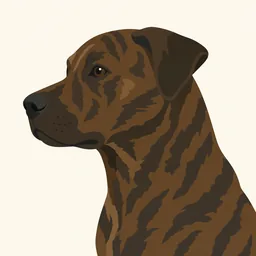
 Mountain Cur
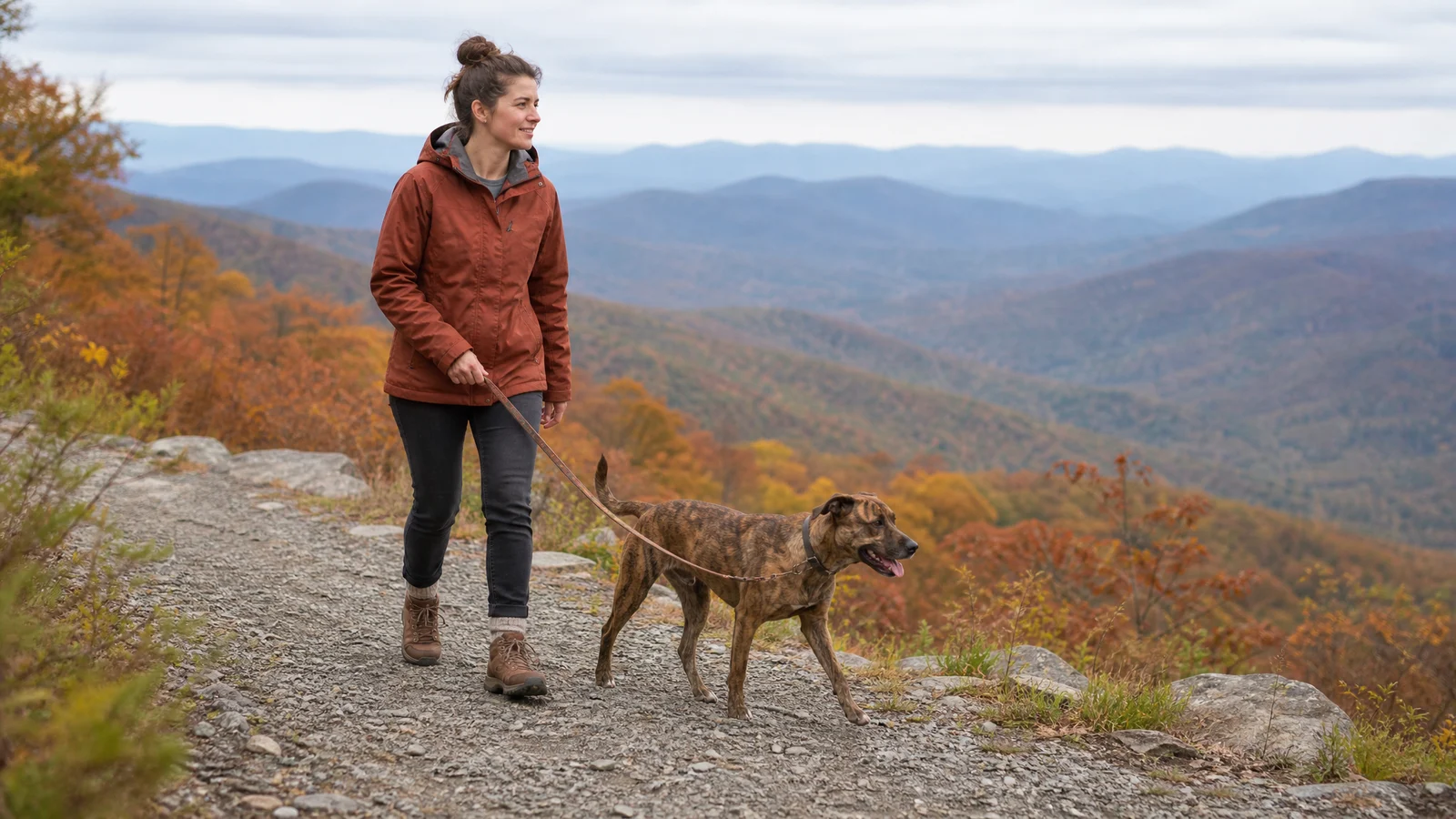
A loose leash begins before the Mountain Cur reaches the sidewalk. If equipment can slip, the gate launches directly toward wildlife or fresh scent starts beside the driveway, formal walking mechanics are already competing with a difficult route. Secure fit and a workable opening path come first. This guide treats each walk as a route laboratory.
We separate ordinary forward pull from scent lock and sudden wildlife pressure, teach slack in a quiet launch zone, then use sniff access as a reward. Route notes focus on recovery, because reconnecting after a trigger matters more than holding one position for an entire walk. Every new route is adjusted from observed evidence.
Mountain Cur Leash Gear and Trail Escape-Point Check
Fit equipment indoors while the dog is calm. A harness should allow ordinary shoulder movement without rotating, rubbing or opening a gap when the dog backs up. Check each buckle and attachment point by applying gentle pressure in the directions the dog might move.
Harness Fit Before Trail Distance
The AKC harness guide explains that front and back attachments affect control differently and that fit must be checked. No single harness prevents pulling by itself. Choose equipment the dog can wear comfortably, then teach the walking response with rewards.
An identification collar should be properly fitted even when the leash attaches to a harness. Humane World's collar guidance recommends enough room for two fingers while preventing the collar from sliding over the head. Recheck after weight, coat or equipment changes.
Route Conditions Before the Door Opens
Map the first minute of the route. Note doors, gates, parked cars, blind corners and places where squirrels cross. Carry rewards before touching the exit. If opening the front door points the dog at the hardest part of the walk, practice in an interior hall or fenced area first.
Weather changes the route laboratory. Heat can make an exposed sidewalk unsuitable, while rain may intensify scent and wind can carry wildlife odor across the path. Recheck surface temperature, visibility and escape space before leaving, then choose a shorter alternative when conditions remove the dog's workable distance.
Regular veterinary visits belong behind leash work because pain can change gait, pulling and tolerance of equipment. Stop and arrange an exam for sudden reluctance, limping, repeated scratching under the harness or a new change in walking posture.
This route map belongs beside the equipment check because a secure harness does not make every starting point workable. Choose the row that best fits the first pressure, then change the route before asking for another response.
Three Leash-Pressure Patterns on Mountain Cur Trails
Not all tight leashes have the same cause. Read what happens before the line straightens and what the dog can do afterward. These three patterns can overlap, but identifying the earliest one tells the handler whether to slow the launch, leave scent or exit from wildlife.
Forward Pressure Keeps Traveling
The dog continues in the direction of movement and may reconnect when the handler stops. This pattern often improves when slack is reinforced frequently at the start. Short steps and predictable releases prevent the first block from becoming one long pull.
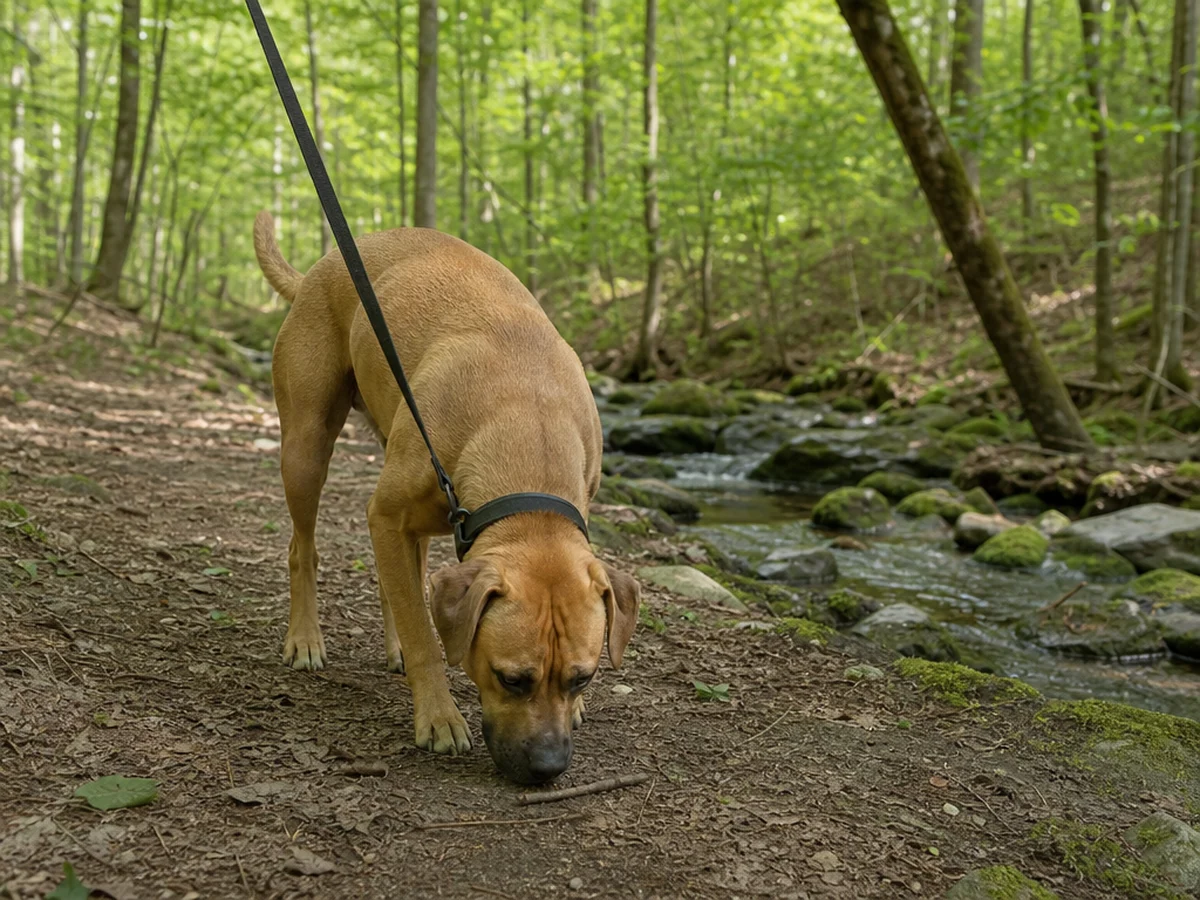
Scent Pressure Narrows Attention
The head or nose points toward one odor, the pace may slow and food offered at the body can lose value. Do not drag the dog away. Create a curved exit at enough distance, then reward the first orientation back and provide a different sniff opportunity.
Wildlife Pressure Arrives Suddenly
A squirrel, rabbit or moving bird can produce rapid acceleration. Equipment and distance protect the dog while a rehearsed turn moves the team away. The Mountain Cur prey guide covers broader management for movement triggers at windows, fences and walking routes.
A dog moving steadily forward may catch a hot track and become harder to reach, then surge when the animal appears. Use the earliest change as the exit point. Waiting for the strongest pull makes the route lesson less clear and recovery slower.
Slack-Leash Behavior in the Trail Launch Zone
Choose a quiet strip where the dog can succeed before reaching the regular route. Begin standing still with enough leash for natural posture. The RSPCA walking guide starts this way and rewards the moment a dog offers attention on a loose line.
Mark a glance, head turn or small movement toward the handler, then deliver the reward beside the leg. Take one step. If the leash remains slack, mark again and move another few steps. The walking position can vary as long as the line hangs and the dog remains connected.
The first loop has five moments rather than a required heel position. Wait for orientation on visible slack, mark the return, place the reward beside the walking line, take one or two steps and reinforce before pressure appears. A brief successful loop then opens access to a chosen sniff point.
Stopping removes forward progress without pulling the dog backward. As soon as the Mountain Cur reconnects and slack returns, reward and move again. If this produces constant stops, shorten the route, raise reward frequency or choose a less exciting launch zone.
Practice the exit separately from the full walk. Open the door a small amount, reward a turn back and close it before stepping out. Add doorway movement after the dog can stay loose through the smaller picture. Our Mountain Cur training guide supports the same short, relationship-based practice.
Sniff Access as a Leash Reward
Sniffing is part of the walk rather than a failure to heel. The ASPCA enrichment guide describes nose use as stimulating and calming. Planned access can reward slack, reduce conflict and give a scent-driven dog information about the environment.
Choose obvious sniff zones away from roads, trash and private property. Approach on a loose leash, mark the last connected steps and give a release cue. Follow at a safe pace while the dog investigates, then use a separate cue before returning to the walking line.
Do not use every scent as the reward. A track leading under a fence, into brush or toward wildlife is not a safe destination. Turn away and provide access to a different patch after the dog reconnects. The reward remains sniffing, while the handler chooses the location.
Keep the leash long enough for comfortable investigation but short enough for the setting. A standard leash suits sidewalks and launch practice. A long line can support decompression in an open legal area, but it requires gloves-free handling skills, clear ground and distance from roads, people and animals.
The AKC breed profile describes a very active dog who needs physical and mental exercise when not hunting. A sniff-rich walk can meet part of that need, but it does not replace age-appropriate movement, training and rest across the day.
| Pressure pattern | What comes before it | Useful route change |
|---|---|---|
| Forward momentum | Steady pace toward the next area | Use a quiet launch zone and shorter steps |
| Scent lock | Nose or head fixes on one trail | Increase distance and offer planned sniff access elsewhere |
| Wildlife surge | Sudden sight, sound or movement | Use the practiced exit and leave the trigger path |
Leash Exits for Squirrels and Fresh Scent
Teach the exit where no animal is present. Say the cue once, turn in a broad curve and reward the dog for catching up beside you. Continue moving until ordinary sniffing returns. A stationary cue can leave the dog facing the trigger, while a practiced route changes the whole picture.
The exit sequence starts with the first head lift, stare or pace change. Use the cue before full pressure, turn across safe open ground and reward movement with the handler. Keep traveling after the reward until the dog can sniff and respond normally again.
Parked cars, hedges and driveway entrances can provide visual cover when used safely. Cross the street before the trigger is close, not during a surge. If the route offers no escape space, reverse early or choose another walking time.
Food refusal is information, not stubbornness. The dog may be too close, too aroused or fully engaged with scent. Increase distance and simplify the task. Once recovery occurs, offer a safe sniff zone or end the walk without returning to the same trigger.
Never follow a fresh track simply to practice recall. The Mountain Cur may gain speed or encounter the animal at close range. Use fenced spaces and controlled reward setups for harder training. Our Mountain Curs and cats guide adds household context for prey-related movement.
Decompression Leash Walks Need Separate Trail Rules
A decompression walk allows more sniffing and route choice in a quiet, suitable place. It is not an off-leash test. Use secure equipment and a long line only where space and local rules allow, then scan for wildlife, bicycles, dogs and line-entanglement hazards.
Give the dog more time without abandoning connection. Reward voluntary check-ins, pause before crossing paths and gather the line smoothly as the environment narrows. Avoid letting slack loop around legs or vegetation. Change direction before the dog reaches the end at speed.
Separate decompression from precision practice in the schedule. A few connected launch-zone repetitions can lead into a longer sniff walk, then another short slack loop can close the outing. The dog learns which cue opens exploration and which cue returns to the shared line.
Puppies, seniors and dogs returning after injury need routes matched to their bodies. Surface, heat, duration and recovery matter more than distance. The Mountain Cur puppy guide covers early skills, while a veterinarian can advise on individual activity limits.
Mountain Cur Leash Notes After a Trail Walk
Write a brief route note after the harness comes off. Record the launch zone, strongest pressure pattern, trigger distance, exit response and how long ordinary sniffing took to return. The goal is to design the next walk, not to grade the dog.
- Which section produced the first tight leash?
- Was the pattern forward momentum, scent lock or wildlife pressure?
- Did the exit begin before full pressure?
- Where did slack and voluntary check-ins return?
- Should the next route add distance, cover or an earlier turn?
Compare recovery across similar routes. More frequent check-ins and a quicker return to ordinary sniffing show useful progress even when squirrels still matter. If recovery becomes slower, reduce difficulty rather than adding more cues to the same pressured moment.
Seek a qualified reward-based professional when pulling creates fall risk, the dog repeatedly escapes equipment, lunging is difficult to manage or no safe route provides workable distance. A veterinary visit is appropriate for sudden change. The best next trail is the one where secure gear, planned sniffing and early exits let the Mountain Cur reconnect.
 Training basicsAre Mountain Curs Easy to Train?
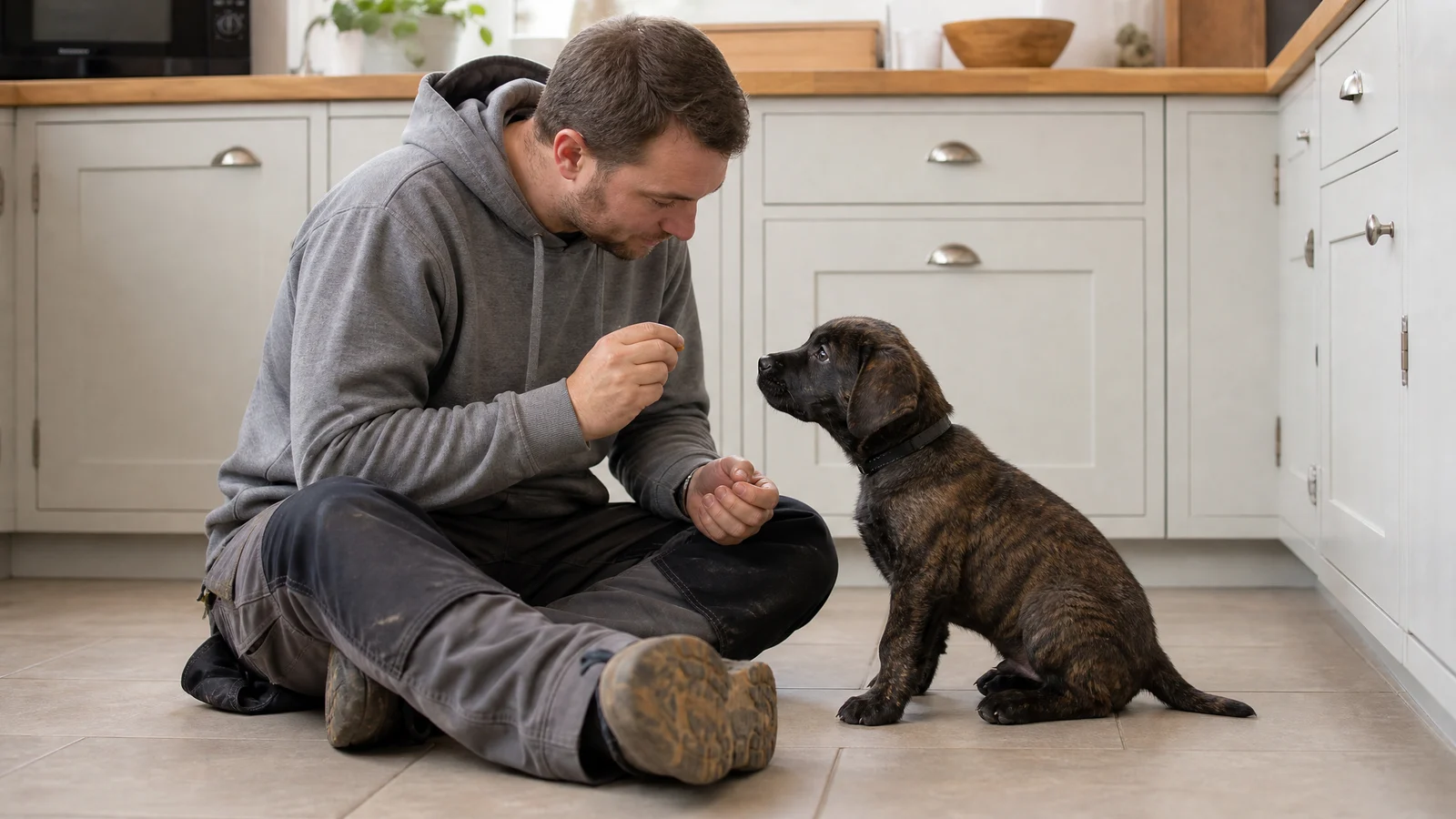 Puppy trainingHow to Train a Mountain Cur Puppy: The First Months
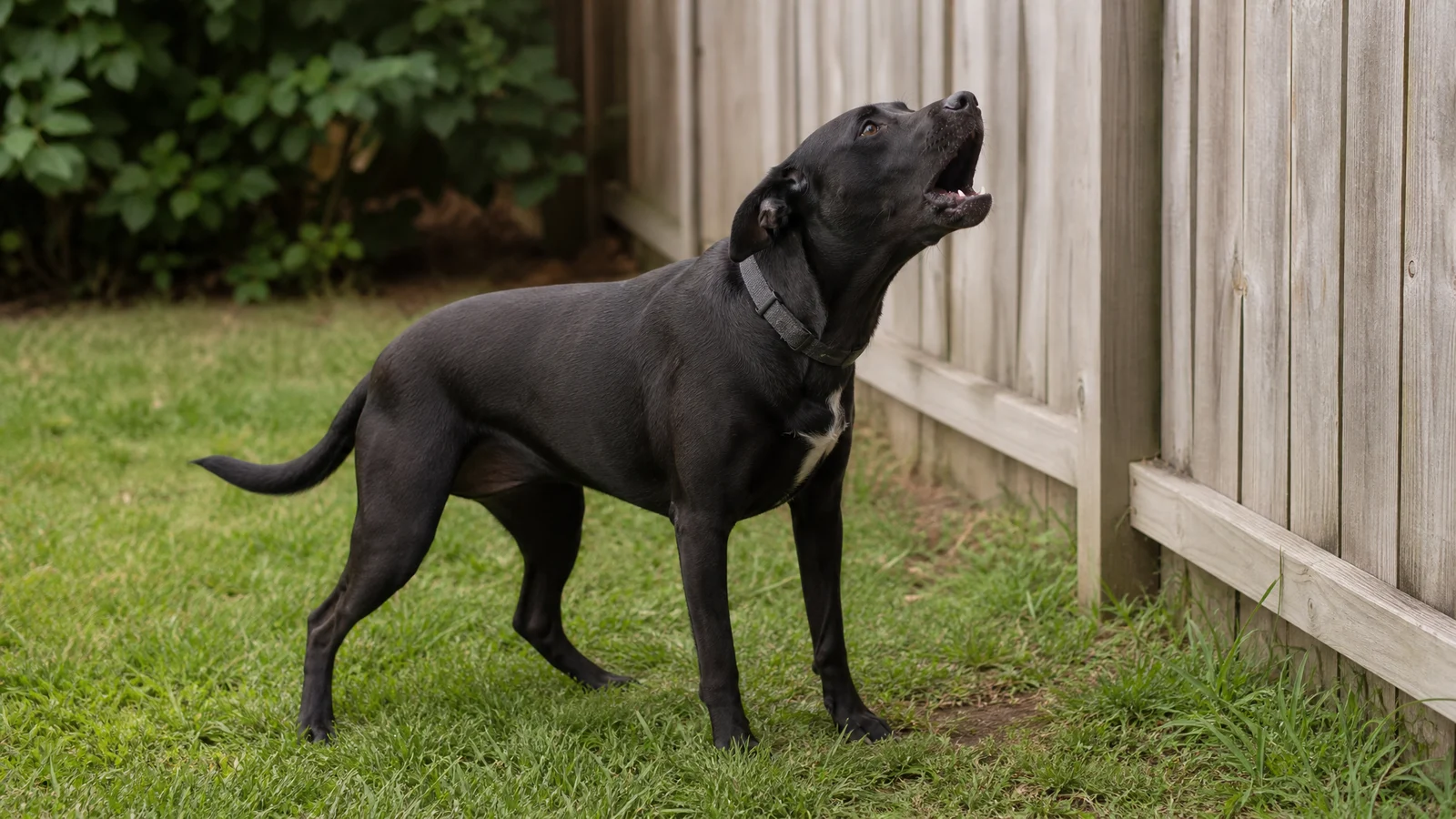 BehaviorMountain Cur Barking and Whining: Loud, Quiet or Talkative