 Mountain Cur
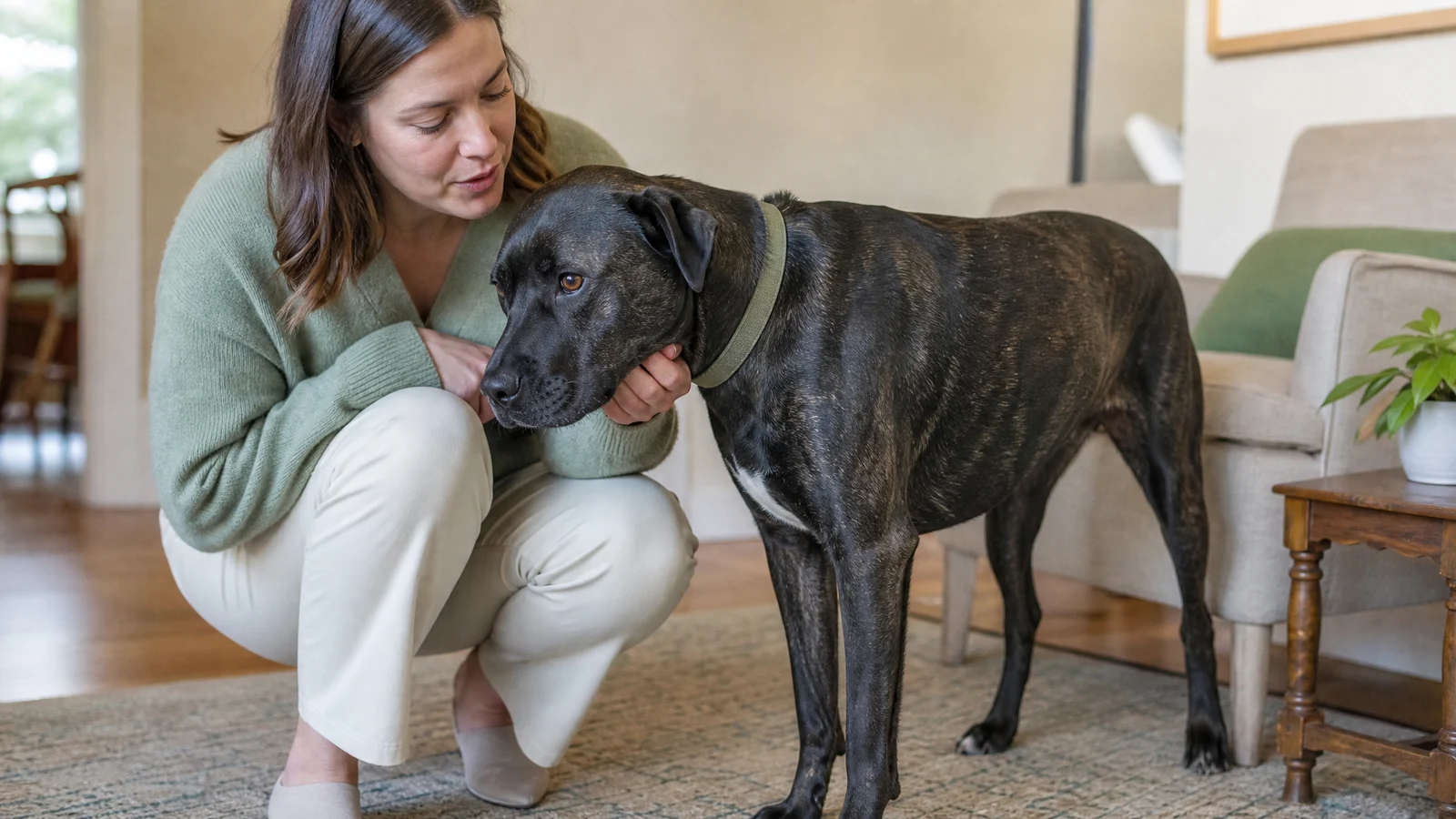
Some Mountain Curs take in a brand-new task after one walk-through and look back at you for the next, while others flatten, tremble or retreat to the far side of the room the moment a voice sharpens, and no cheerful tone afterward draws them back to the lesson.
We reviewed 57 Mountain Cur owners' first-hand accounts, and the pattern in them is consistent: these dogs respond to praise, a calm voice and an offered alternative, while harshness is said to damage trust. A quiet, steady teacher tends to get a quick and devoted partner. A loud one can spend months, or with a fearful rescue years, rebuilding that trust.
We'll walk you through the beliefs that send owners astray, from smart dogs needing one lesson to stubborn dogs needing pressure, then the voice that works, the ignore-and-redirect loop, praise for timid dogs and cues that replace grabbing, and finally the one thing to do today.
Myths About a Sensitive Mountain Cur
Two beliefs about this breed's brain shape how people start, and each holds a piece of truth that makes it hard to let go. One says a clever dog needs a single lesson. The other says a stubborn dog needs to be pushed.
"One Lesson Is Enough"
Owners often describe a dog who picks up even a complex task in one or two repetitions, and we read that as a genuine pattern in their accounts rather than a promise about your dog. The breed is called extremely smart, loves having a job, and is trainable enough to work as a therapy dog.
The same accounts show where the belief breaks down. Some dogs are described as difficult to train while others are agreeable, and a trick learned in two tries in the kitchen can vanish outdoors. Recall is the weak spot owners name most: a dog who knows every other cue and still will not come, especially near small animals. Our complete guide to training a Mountain Cur builds that skill in stages.
Fast learning also cuts the other way. A dog who masters a cue in two tries masters the counter in two tries as well, and a dog whose name is called again and again learns that the name is background noise. Say each cue once, keep sessions short, and pay with something the dog truly wants.
"Stubborn Means Push Harder"
Owners call their dogs hardheaded, slow to answer a name, fond of climbing where they were told not to, and affectionate strictly on their own terms. It is easy to read that list and decide the dog needs firmer handling.
The breed description points somewhere else. It says a Mountain Cur responds better to training with lots of human contact, and it pairs intelligence with a strong desire to please. Breed fanciers add that these dogs work with their people and do best once a solid bond has formed.
So contact is the tool, and consistency is the form it takes: the same rule each day, the same word for the same thing, the same reward for the same good choice. Consistency is not hardness, and a dog this attentive notices the difference at once.
Owners of rescued adolescents and adults give the clearest picture. Most describe a sweet, affectionate, loyal dog, including dogs they also call stubborn or a handful, and several say the rescue made them fans of the breed. The stubborn streak and the sweetness live in one dog, and it is the sweetness that answers to gentleness.
Voice With Sensitive Dogs
Training this breed is partly an exercise in sound, and the myth here is that more volume means faster results. Three things matter instead: what volume does to a reserved dog, what excitement sounds like from the dog's side, and how to make a marker word carry real information.
Why Loud Backfires
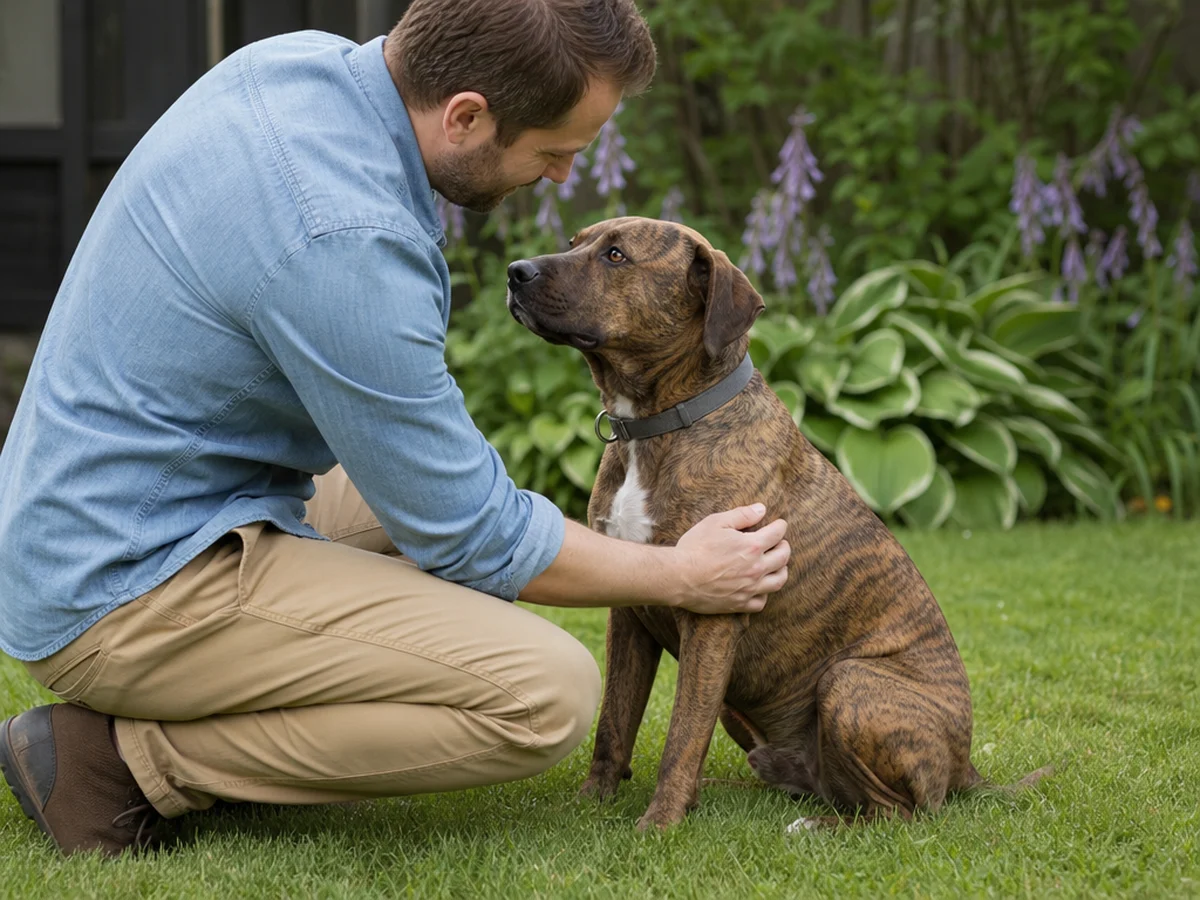
Experienced owners say harsh words damage a trust these dogs are slow to give back. That is owners' experience rather than a measured fact, but it fits the wider view that training goes better with showing the dog an alternative behavior to perform than with punishing the mistake.
The breed's reserve helps explain it. Fanciers note these dogs do not tolerate "rude" behavior well, such as children pulling ears or pushy, overly friendly dogs, and a shouting human can look like one more rude visitor.
Timid dogs make the case most plainly. Owners report that a shy Mountain Cur, including a nervous stray, needs no more than a look or a soft word to understand that something was off, which tells you how little volume the lesson ever required.
When Excitement Sounds Like Anger
Make a level voice your habit, since a delighted shout at the door and a furious one can sound much alike to a dog. A dog who guesses wrong may learn to expect trouble from the people they love most.
You do not have to go silent. Save your highest, happiest pitch for the moments the dog gets something right, and keep everything else low and even. After a few weeks the contrast does the teaching for you.
Building a Marker Word
A marker word pins down the moment a behavior earned its reward, which suits a quick mind that would otherwise guess at what you liked. Shelter trainers suggest pairing a clicker with food by choosing to give a treat within 3 seconds of the click, repeated several times somewhere calm and quiet, and a spoken word follows the same pattern. Here is how to set one up:
- Pick one short word, such as "yes," and say it in a flat, friendly tone every time.
- Charge the word before relying on it, saying it and handing over a small treat right away, in a few quiet sessions with nothing else going on.
- Give each cue once and then wait, because repeating it teaches the dog that the first request was optional.
- Stop while the dog is still keen, since a clever dog with a stubborn streak tires of drills long before you do.
Redirecting a Sensitive Dog
The next myth says ignoring unwanted behavior is the same as letting it slide. Our own practice is one loop: say nothing to the behavior, offer something better, and praise heavily when the dog takes it. We think it works, with a condition that is easy to miss, which is that ignoring only removes the audience and a clever dog still has to be shown what earns the audience back.
That gap matters because the breed is described as extremely smart and prone to trouble when left unsupervised, so a dog this quick fills any empty minute with a hobby of their own. In practice the loop runs like this:
- Go still and quiet as the behavior starts, with no eye contact, no sigh and no repeated name.
- Ask for something the dog already knows well, such as a sit or a trip to their mat, so the alternative is easy to find.
- Mark the moment they do it and hand over a reward they truly want.
- Follow with warm, generous praise, because praise is what makes the alternative worth repeating.
- Rearrange the environment for anything that pays off on its own.
That last step deserves a few more words. Ignoring cannot fix a behavior that rewards itself, and determined food theft from counters is the example owners bring up most, with bread, ribs and steak all disappearing. Clear the counter, close the kitchen door, and save your patience for the behaviors where your attention was the prize.
Chewing is another case. Forbidden items can tempt a dog even when a basket of toys is on offer, so give attention and rewards for good choices, such as settling with a chew, and never let the quiet half of the loop stretch into a quiet household. When problems begin to stack up, our overview of Mountain Cur behavior problems helps you choose where to start.
Praising a Sensitive Mountain Cur
A common worry is that lavish praise makes a dog soft or leaves them working only when flattered. With this breed we would argue the reverse, particularly for dogs who arrived fearful, hiding and shivering, and sometimes still described as traumatized after a year and a half together.
Owners of rescues report that their dogs settled through love, consistency, encouragement and time, and that for the most fearful it took years rather than weeks. Praise for ordinary behavior, such as crossing a room or lying down in the open, is one practical way to supply that encouragement, and it builds confidence without promising to erase every worry.
There is a breed-level reason to care as well. The show standard disqualifies both viciousness and extreme shyness, so the target is a steady, confident dog, and confidence grows from small moments of being noticed doing something right. A reserved dog who is never praised for standing calmly beside you has little reason to keep standing there.
Fit the praise to the dog in front of you. Owners describe clingy dogs who stay inches away and others who act more like cats, wanting attention on their own terms. For the first kind a quiet word and a hand on the chest may be plenty. For the second, a treat tossed from a distance or a favorite game may carry the message better than a hug they would only tolerate.
Fearful rescues need patience more than technique. Early meetings with people and places go best when they follow the same calm pattern, as our Mountain Cur puppy socialization guide explains.
Mountain Cur Cues, Not Grabbing
The last belief is that sometimes you simply have to move the dog yourself: lift them off the sofa, haul them from a tempting item, pry something loose. With a reserved Mountain Cur, especially a rescue whose past nobody fully knows, a hand that darts in suddenly is a poor fit, and it teaches the dog to watch your hands instead of listening to your words.
The alternative is to replace each physical shortcut with a cue the dog understands:
- Teach "off" for the sofa and reward the dog for hopping down on their own.
- Teach "come" so that you never need to chase, and keep it fun enough that arriving beats staying away.
- Teach "drop" so nothing has to be taken by force, by learning to pair giving something up with a treat and offer a trade whenever you need to take something away.
Each of these is a small piece of trained cooperation, and each protects the trust you will need later. If your dog already reacts strongly when handled or approached, our look at aggression in Mountain Curs sets out what is common and what deserves a professional's eye, ideally one who uses rewards.
Keep up regular vet visits as well. A dog who used to take requests calmly and suddenly will not may be uncomfortable rather than defiant, and an exam is the quickest way to find out.
Tonight's Step for Sensitive Dogs
Put the whole picture together and it sounds almost dull from the next room: a low voice, a small treat, a dog being told in plain terms what earned the reward. That is the point. This is a reserved, quick, relationship-driven breed, and the household that stays steady tends to get the dog who stays steady.
So here is the one thing to do today. The next time your Mountain Cur does something you do not want, stay quiet, offer them something better to do, and praise them generously when they take it. Then do it again tomorrow, for as long as it takes, which for a confident dog may be days and for a fearful one may be years.
 BehaviorResource Guarding and Protectiveness in Mountain Curs
 BehaviorHelping a Reserved Mountain Cur Meet Visitors at Their Own Pace
 BehaviorMountain Curs Digging Out: Dig Spots and Fence Fixes